
Skip to content
Edgewood University Logo with White Text

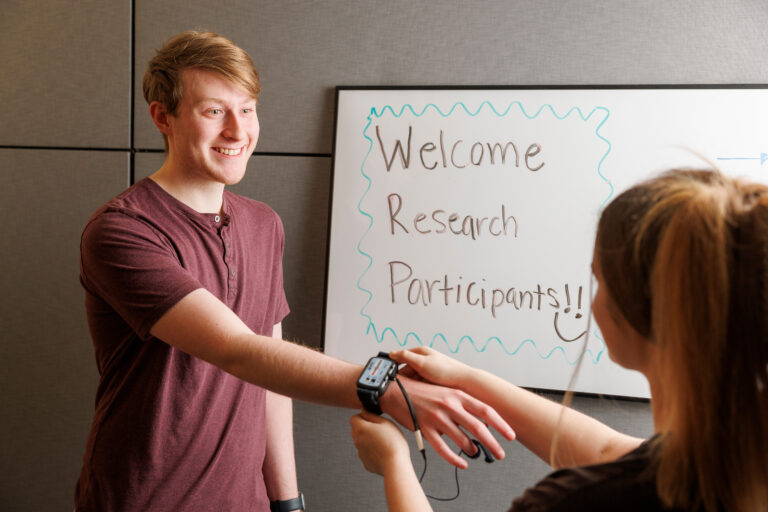
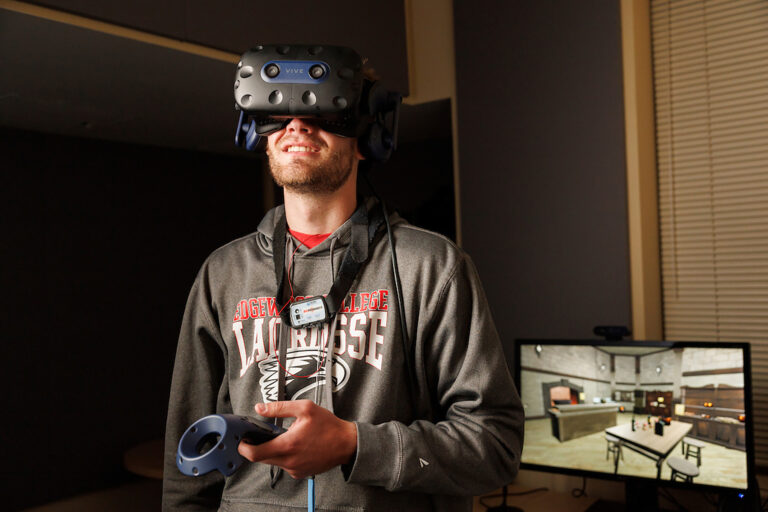
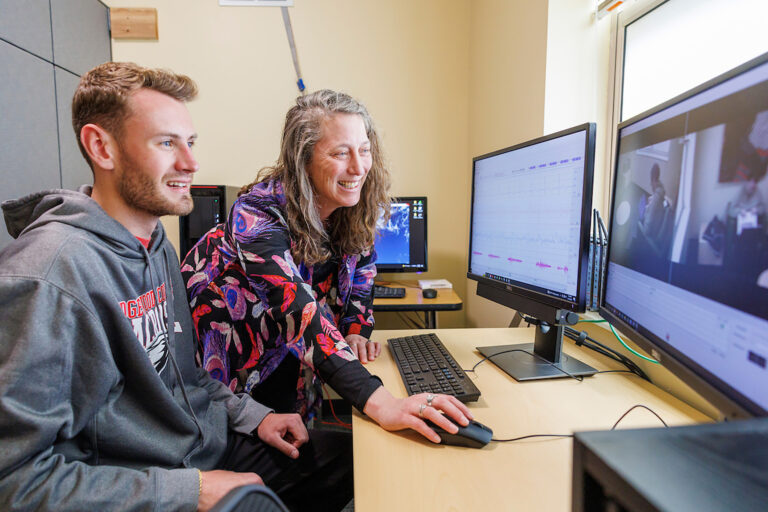
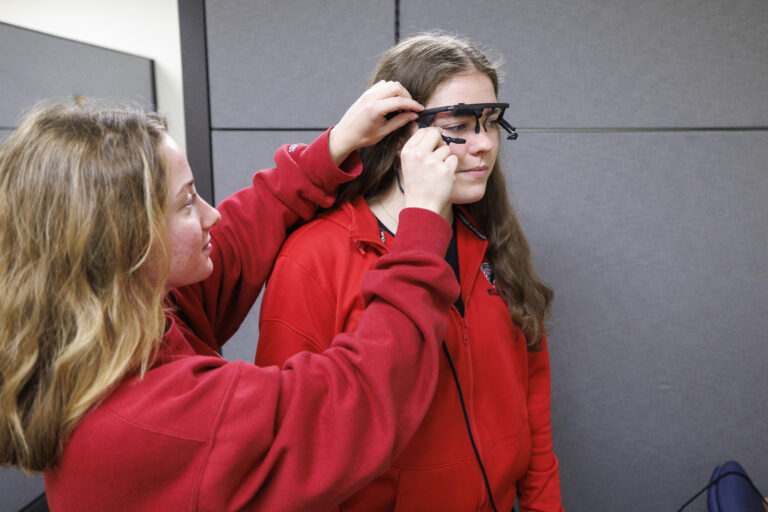
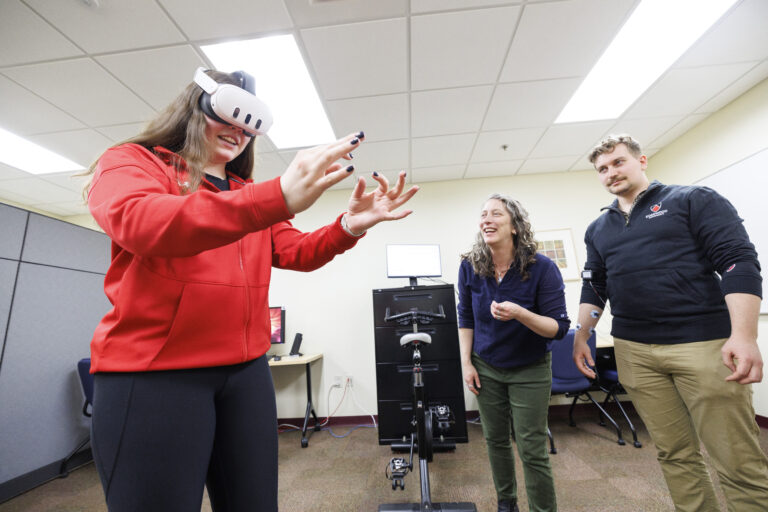
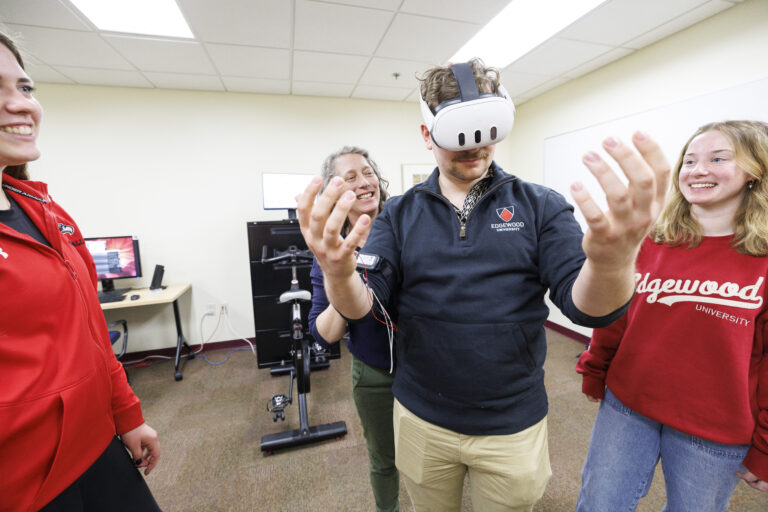
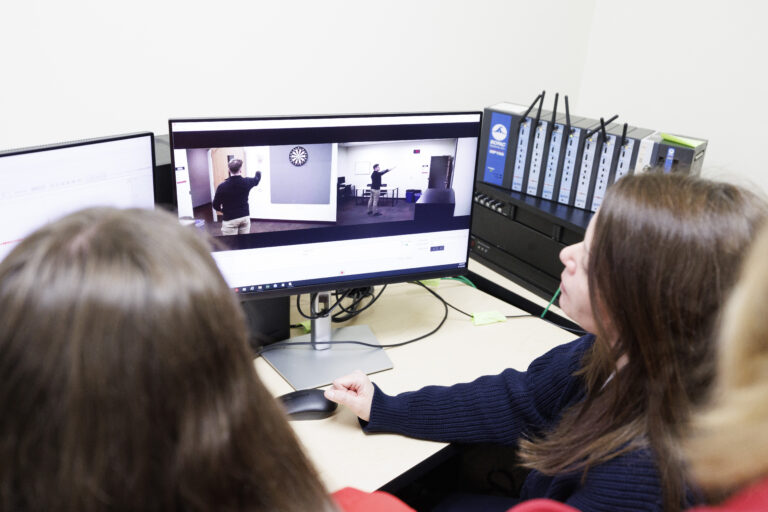
The Psychology Research Center at Edgewood University is a multi-purpose behavioral research laboratory. This research center enables students to engage with the research process as principal investigators, research assistants and research participants. Students in the Psychology and Neuroscience programs who are interested in developing research skills to design and implement high-level projects that are carried out in the Psychology Research Center using any of the many tools available, including recording of behavioral observations, Virtual Reality immersion, physiological data collection, eye-tracking technology and experimental presentation. Such experiences allow students to develop skills that are relevant for a career in research as well as highly valued by employers and graduate school admissions representatives.

Current Research Participation Opportunities

Cognitive Performance and Training, An Exploratory EEG Driving Simulator Study – IN PERSON

You are invited to participate in a research study exploring how brief cognitive and physical activities influence brain activity and performance. If you choose to participate, you will wear a non-invasive device called an EEG that measures and records your brain activity in real time. Small sensors (electrodes) will be placed on specific areas on your scalp, secured with a comfortable neoprene cap.

During this study, you will complete a driving simulation program both before and after being randomly assigned to engage in 20 – 25 minutes of a cognitive task or physical activity. The entire session will take place in the Edgewood University Psychology Research Center (Regina Hall, Room R37), and will last for approximately 45 – 60 minutes.

If this study sounds interesting to you and you would like to know more or participate, please contact Jared Mertens-Pellitteri at jmertenspellit@edgewood.edu to schedule a session in the Psychology Lab from the listed times above.

Available time slots for participation listed here

Mondays: 7:00 am – 8:00 pm

Tuesdays: 7:00 am – 8:00 pm

Wednesdays: 7:00 am – 8:00 pm

Thursdays: 7:00 am – 8:00 pm

Fridays: 7:00 am – 8:00 pm

Saturdays: 7:00 am – 8:00 pm

Sundays: 12:00 pm – 8:00 pm

If you have any other questions about the study, you can also contact the Faculty Advisor, Ferrinne Spector: FSpector@edgewood.edu

Social Media, Body Image, Eating Habits, and Well-Being – ONLINE

You are invited to participate in an anonymous research study about the relationship between social media usage, health behaviors, and well-being. This research will be conducted over the internet using an online survey tool. You will be asked some basic demographic information and to respond to several questions about your social media usage, eating habits, how you feel about your health and your body, as well as questions about various aspects of your well-being. Most people can complete this survey in approximately 15 minutes.
Upon completion of this survey, you will have the opportunity to obtain course extra credit (if your instructor is giving extra credit for participating).
If you have questions about the research after you are done, you should contact David Lambert, at lambert@edgewood.edu.
Please click on this link, or cut and paste it into your browser, to access survey:

Men’s Opinions Needed – ONLINE

You are invited to participate in an anonymous, online research study about your opinions regarding personal and social issues. This research will be conducted over the internet using an online survey tool. You will be asked some basic demographic information and to respond to several questions about your friendships with other men and related issues. Most people can complete this survey in approximately 10-15 minutes.
Upon completion of this survey, you will have the opportunity to obtain course extra credit (if your instructor is giving extra credit for participating).
To complete the survey please click on the following link (or you can cut and paste the address into your web browser):
If you have any questions, please contact David Lambert, via email (lambert@edgewood.edu).

Non-Verbal Digital Communication Study – ONLINE

You are invited to participate in an anonymous, online research study about your digital communication behaviors and experiences. You will be asked some basic demographic information, and to respond to several questions about your digital media usage, your experiences with non-verbal digital communication, and how you feel about certain aspects of your life. Most people can complete this survey in approximately 20 minutes. All answers are anonymous.
Please click on this link, or cut and paste it into your browser, to access survey:
If you have questions about the research, contact David Lambert at: lambert@edgewood.edu.

Psychology and Neuroscience Project Examples

Blue-Light Blocking Glasses and Eye Strain

Blue-Light Blocking Glasses and Eye Strain
Presented by Marisa Spiering & Ferrinne Spector
Neuroscience Department, Edgewood University
Objective:

Investigate the claims that blue light blocking glasses reduce eye strain as measured by saccade frequency which is a rapid movement of the eye between fixation points. We hypothesized that if blue light blocking glasses reduce eye strain, there would be a smaller number of saccades in the blue light blocking glasses group compared to the control group.


Discussion:

Results suggest that we did induce eye strain within the 25-minute reading session. There was insufficient evidence to fully support the claims that blue-light blocking technology does reduce eye strain. However, there is descriptive evidence that suggests that they might. The change in amplitude of the eye movements shows that the saccades had a higher intensity in the control. Therefore, eye movements became more intense for them, as compared to the blue light blocking group, which decreased over time.

Focus and Flight: How Focus of Attention Impacts Muscle Recruitment and Performance in a Skills Learning Task

Focus and Flight: How focus of attention impacts muscle recruitment and performance in a skills learning task
Presented by Evan Rufer & Ferrinne Spector
Psychology & Neuroscience Programs, Edgewood University
Madison, Wisconsin
Objective:

To better understand how Focus of Attention (FOA) during visual motor skills learning influences rate of improvement, and explore muscle engagement across attention conditions. We hypothesized that the rate of improvement will be higher with an external FOA compared to an internal FOA. We also predicted that there will be different muscle engagement across attention conditions.


Discussion:

External focus of attention leads to a slight advantage in visual motor skills learning. Learning can be measured by improvement over
trials and performance was measured by a points scale​ which throws that were closer to the center ​ receive a higher value (1-10 points). This suggests that cognitive strategies as well as muscle-related biofeedback may be effective mechanisms for visual motor skills training.
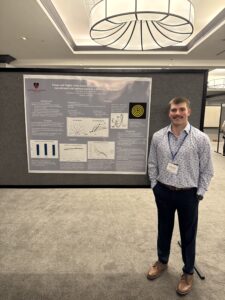
Evan presenting his work in Boston at the Cognitive Neuroscience Society annual conference.

Physiological Effects of Anxiety Provocation in Virtual Reality Settingings

Experience and Virtual Reality: Trait Anxiety and Autonomic Arousal in Provocative VR Environments
Presented by Katie Lange and Ferrinne Spector
Psychology Department, Edgewood University
Objective:

It is important to examine how trait anxiety relates to autonomic arousal and tolerance in VR settings, and to examine how provocative virtual environments elicit arousal and feelings of presence/realness. We predicted that higher levels of trait anxiety would be associated with higher autonomic arousal and lower tolerance over a period of exposure. Currently VR research has been primarily directed at addressing specific phobias, rather than addressing generalized anxiety or exposure therapies. A potentially powerful next step in Virtual Reality Exposure Therapy (VRET) may be addressing clinically relevant anxiety. 


Discussion: ​

Not all environments are equally arousing, the heights environment was the most affectively arousing, and led to the most sense of presence. Heart Rate Variability was the only measure that was consistent across environments. 

Future Directions could include an established database of virtual reality stimuli rated by valence and arousal comparable to the International Affective Picture System (IAPS) to study emotion. This would allow researchers and clinicians to use empirically validated measures to quantify the arousal quotient of different environments, and these measures could be used to start developing a virtual reality valence/arousal library for future studies and for application in VRET.

The Path of Attention: Automatic and Effortful Attention in Visual Search Tasks

The Path of Attention: Automaticity and Effort, Concept and Percept in Multimodal Visual Search Tasks
Presented by Alessandra M. Sardina & Ferrinne Spector
Psychology Department, Edgewood University
Objective:

The purpose of this study is to examine audiovisual attention with multiple forms of communicative cues such as images and sounds. This was done across automatic and effortful attention conditions. We predict conceptual associations in automatic conditions will have higher accuracy and faster response times. Further, we predict there will be no difference in reaction time between the associations in the effortful condition.
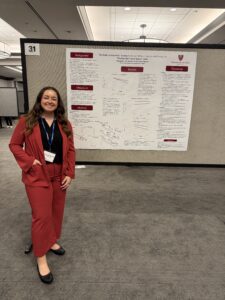
Alessandra presenting her work in Boston at the Cognitive Neuroscience Society annual conference.

Unpredictable Auditory Stimuli and Risk Taking Behavior

Unpredictable auditory stimuli and risk-taking: The role of executive functioning, affect, and sensation-seeking
Calvin Moen & Ferrinne Spector
Psychology Department, Edgewood University
Madison, Wisconsin
Objective:

How does anxiety (induced by unpredictability) affect risk preference.

Executive Functions (EFs) are a set of cognitive functions such as inhibition, switching, and updating past knowledge. Do EFs and emotion regulation moderate the relationship between anxiety and risk preference?

How might different ways of presenting unpredictable stimuli affect risk preference, and do different subconstructs of EF moderate these
relationships?


Discussion:

Results suggest that:
• Risk preference is primarily explained by an individuals traits rather than their emotional state which is influenced by the unpredictable sounds
• Anxiety does not affect risk preference, nor do EFs play a moderating role
• The study reinforces the importance of individual difference in predicting risk-taking behavior
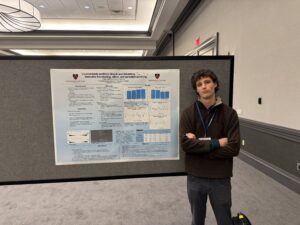
Calvin presenting his work in Boston at the Cognitive Neuroscience Society annual conference.