Master of Science in Nursing:Family Nurse PractitionerHenry Predolin College of Health Sciences
Why Choose Edgewood University’s Family Nurse Practitioner Program
Edgewood University’s Master of Science in Nursing (MSN) — Family Nurse Practitioner (FNP) program prepares registered nurses to deliver high-quality, patient-centered care across the lifespan. Clinical coursework is taught by practicing Family Nurse Practitioners who bring relevant, practice-informed experience into the learning environment.
Deeply invested in student success, faculty provide high-touch mentorship throughout the academic journey and into advanced practice preparation. This commitment extends beyond the classroom through close collaboration with clinical preceptors – ensuring clear communication, shared expectations, and meaningful clinical learning experiences.
Faculty raise the standard for clinical education through intentional, hands-on oversight. Throughout the full year of clinical rotations, faculty communicate closely with each clinical preceptor and conduct regular check-ins to ensure alignment, support student progress, and strengthen partnerships. Whenever possible, faculty also visit students at their clinical sites to further enhance collaboration and individualized development.
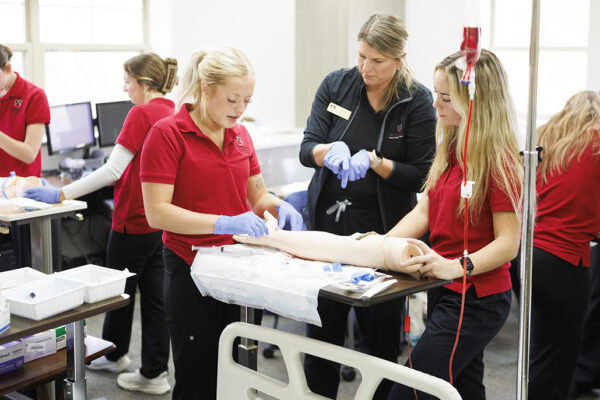
Flexible coursework is paired with thoughtfully designed experiential learning, including Clinical Bootcamp Day and faculty-led simulations. Together, these experiences build clinical confidence, diagnostic reasoning, and advanced practice readiness. Graduates are well prepared to meet the health care needs of patients, families, and communities – a level of preparation demonstrated through strong performance on national board certification exams.
Madison, WI
Virtual
45
Careers as a Family Nurse Practitioner
For multiple years running, including 2026, Nurse Practitioners have been ranked the nation’s top career overall — as the #1 Best Health Care Job and the #1 Best STEM job — by U.S. News & World Report, underscoring strong demand and rewarding opportunities in the field.
$132,050
Average annual salary for a Family Nurse Practitioner
6
Total Starts
750
Clinal Hours
3
Years to Completion
Featured Courses
NRS 680 – Differential Diagnosis
Course designed for advanced practice nursing students to enhance assessment skills, formulate differential diagnosis, and develop therapeutic interventions for patients across the lifespan.
NRS 696D – Transition to Practice Primary Care NP
This course is designed for Family and Adult Gerontology Primary Care Nurse Practitioner students to prepare for professional practice as a nurse practitioner within the primary care setting. The course allows students to become familiar with the primary care nurse practitioner role by teaching them about the transition from RN to NP, reviewing ethical considerations for practice, and utilizing evidence-based practice for decision making in the clinical setting.
NRS 703 – Advanced Pharmacology
This course prepares nurses for professional roles in advanced nursing practice with knowledge of pharmacological principles of medications commonly prescribed to prevent and/or manage adverse health conditions of patients across the lifespan.
MSN-Family Nurse Practitioner Program Format
The MSN—FNP program is delivered primarily online, with all didactic coursework offered in an asynchronous format. This structure allows students to balance graduate study with professional and personal commitments.
To enhance engagement and support clinical readiness, the program intentionally integrates opportunities for connection and hands-on practice. During clinical courses, students are invited to participate in optional monthly virtual meetings designed to foster peer engagement, provide access to guest speakers, and strengthen faculty interaction around advanced clinical topics.
Students also complete four faculty-led simulation experiences throughout the program. Simulations are scheduled directly with faculty and may be conducted either remotely or on campus, depending on the student’s location.
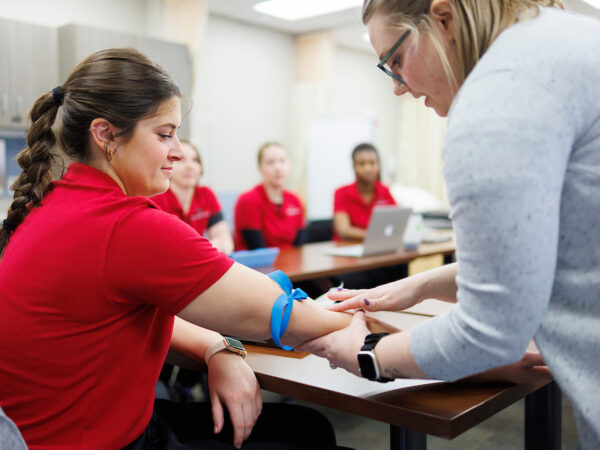
To further support preparation for advanced practice, students are strongly encouraged to attend a one-day Clinical Bootcamp held on Edgewood University’s Madison, Wisconsin campus prior to beginning clinical rotations. In foundational courses such as Advanced Physical Assessment, students may also attend optional open lab sessions on campus to refine hands-on examination skills in preparation for their final head-to-toe assessment.
The blended approach combines the flexibility of fully online coursework with optional hands-on experiential learning opportunities designed to strengthen clinical reasoning, skill development, and confidence in Family Nurse Practitioner practice. Participation in on-campus experiences is encouraged but not required.
Course Structure and Scheduling
The MSN—FNP program follows a structured, year-round format designed to support steady academic progress while balancing professional and personal commitments. Coursework is delivered in focused blocks, with many courses offered in accelerated formats alongside select courses that span a full semester.
This intentional sequence allows students to concentrate on fewer courses at a time while building progressively toward advanced practice and clinical preparation. Our sample course schedule outlines how coursework can be completed over three years, including the integration of clinical and advanced practice experiences. While this illustrates one possible path through the program, course sequencing may vary based on individual circumstances and desired commitment. Both full-time and part-time options are available, and students work with an Academic Advisor to explore the option that best aligns with their goals and circumstances.
Course schedules, instructional methods, and learning activities are designed to support engagement, faculty interaction, and successful progression through the program, while maintaining the flexibility expected in an online graduate nursing program.
Clinical education is a central component of the MSN—Family Nurse Practitioner program. Students complete a total of 750 clinical hours across a broad range of primary care settings, gaining experience with patients across the lifespan—from pediatrics through geriatrics. Students will have the opportunity to complete a specialty rotation within the FNP scope of practice, which is especially valuable for those considering specialty practice after graduation. Clinical experiences emphasize health promotion, disease prevention and screening, and the outpatient management of common acute and chronic conditions.
Edgewood University partners with students throughout the clinical planning and placement process. Approximately one year before clinical coursework begins, faculty meet with students to review expectations and provide a comprehensive clinical packet outlining requirements, timelines, and key resources. Students are encouraged to take an active role in identifying potential clinical sites and preceptors, particularly those aligned with their professional goals. Many students ultimately receive employment offers from sites where they complete their clinical rotations.
Clinical placements are available in Wisconsin and other states, pending licensure and state authorization requirements. Because Edgewood’s clinical network is strongest within Wisconsin, students completing clinicals outside the state are encouraged to be especially proactive in identifying high-quality local opportunities. Faculty maintain regular communication with students and preceptors throughout the clinical experience to support learning, alignment, and successful completion of requirements. Optional virtual calls are held monthly to connect peers, engage with faculty, and feature guest speakers presenting mini lectures on clinical topics. This additional support fosters community and helps students feel connected in the online learning environment.
An intentionally immersive experience, Clinical Bootcamp Day provides students the opportunity to visit Edgewood University’s Madison, Wisconsin campus just prior to beginning their clinical rotations. Held in person on the main campus, this one-day experience is designed to clarify clinical expectations, foster connections with faculty, and reinforce skills introduced in foundational coursework.
During Clinical Bootcamp Day, students will:
- Practice advanced physical examination techniques.
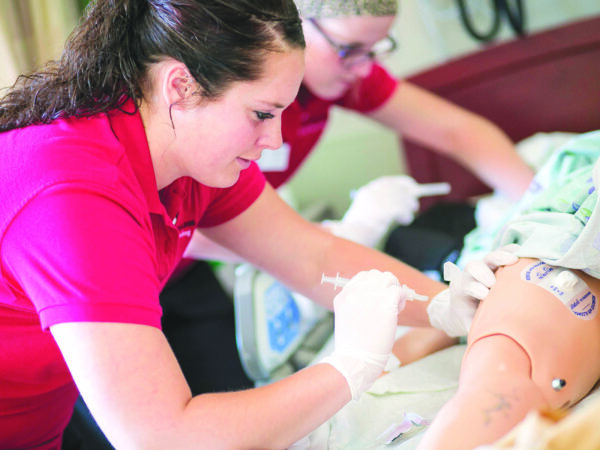
- Refine clinical skills using simulation manikins.
- Participate in focused mini lectures.
- Engage in faculty-led simulation scenarios.
- Practice women’s health assessment skills, including gynecologic and pelvic examination techniques, using the SUSIE® (Standardized Universal System for Instruction in Examination) simulation manikin.
These activities are designed to help students ask the right clinical questions, perform confident physical exams, and apply clinical reasoning to arrive at accurate diagnoses.
Clinical Bootcamp Day is not currently required; however, it is strongly encouraged. Students are responsible for their own travel expenses, as this experience is not offered in an online format. Feedback has been consistently positive, with many noting the value of hands-on learning and real-time faculty guidance in building confidence prior to clinical practice.
Faculty-Led Simulation Experiences
Simulation experiences are integrated throughout the MSN—Family Nurse Practitioner program to strengthen clinical reasoning, decision-making, and diagnostic confidence within a supportive learning environment. These experiences will focus on applying course concepts to realistic patient scenarios, allowing students to practice assessment, diagnosis, and management strategies prior to and alongside clinical rotations.
Students are required to complete at least four faculty-led simulation experiences during the program. All required simulations are available virtually, allowing students to participate regardless of location. In addition, select optional opportunities are offered on campus for students who wish to engage in hands-on simulation lab experiences.
All simulation activities are designed to reinforce advanced practice skills, encourage reflective learning, and prepare students for the complexities of real-world Family Nurse Practitioner practice. Simulations also support the progressive development of therapeutic communication and advanced history-taking skills, ensuring students gain confidence in patient interactions alongside clinical reasoning.
MSN-Family Nurse Practitioner
- 45 Total Credits
- 3-year program (full time)
- Full or part time options
- 100% online courses
View Sample Course Schedule (PDF) Download MSN Student Handbook
Board Certification Preparation and Outcomes
Graduates of the MSN—Family Nurse Practitioner program are prepared to sit for national board certification following program completion. Students may choose to pursue certification through either the American Academy of Nurse Practitioners Certification Board (AANP) or the American Nurses Credentialing Center (ANCC).
Board preparation is intentionally integrated throughout the final year of clinical coursework, with focused support designed to reinforce content mastery and exam readiness.
IN 2024, 100% OF EDGEWOOD UNIVERSITY FNP GRADUATES PASSED THEIR NATIONAL BOARD CERTIFICATION EXAM.
Pathway from MSN—FNP to DNP
Students who aspire to continue their academic journey beyond the MSN—Family Nurse Practitioner may choose to continue into Edgewood University’s Doctor of Nursing Practice (DNP) with an Executive Leadership focus.
Offered entirely online, the DNP—Executive Leadership program is designed for experienced nurses seeking to influence health care at the systems, organizational, and community levels. Coursework emphasizes evidence-based practice, health policy, quality improvement, informatics, and leadership strategy, culminating in a capstone project and customized residency experience.
This optional pathway allows graduates to build on their advanced clinical expertise while developing the skills needed to lead change, improve outcomes, and advance the nursing profession. Students pursuing the DNP pathway work closely with faculty to align their coursework, clinical expectations, and professional goals, ensuring a coherent and purposeful educational experience.
MSN-Family Nurse Practitioner & DNP-Executive Leadership
- 66 Total credits
- 5 years total, full-time (3 years MSN + 2 years DNP)
- Full or part time options
- 100% online courses
View Sample Course Schedule (PDF) Download DNP Student Handbook
Accreditation
The Master of Science in Nursing program at Edgewood University is accredited by the Commission on Collegiate Nursing Education (CCNE), 655 K Street NW, Suite 750, Washington, DC 20001, 202-887-6791. The program is also approved by the State of Wisconsin Board of Nursing.
Frequently Asked Questions
When can I apply for this program?
We encourage students to submit their graduate application and admission materials by the application deadline. Applications submitted after the priority deadline may still be considered for the upcoming start date, but if not, they will be reviewed for the next session.
We’re pleased to offer six entry points throughout the academic year, giving new students flexibility in starting their journey.
| Academic Term | Start Date | Application Deadline |
| Summer I | May 18 | May 1 |
| Summer II | July 6 | June 22 |
| Fall I | August 24 | August 1 |
| Fall II | October 19 | October 5 |
| Spring I | January 11, 2027 | January 1, 2027 |
| Spring II | March 15, 2027 | March 1, 2027 |
What are the admissions requirements for this program?
To be considered for admissions, MSN—FNP program, applicants must submit the following:
- Completed graduate application.
- Evidence of a baccalaureate or more advanced degree in nursing from a nationally accredited nursing program, with a cumulative GPA of at least 3.0 on a 4.0 scale for regular admission status. The cumulative grade point average is calculated based on the highest degree held at the time of application.
- Official transcripts from all post-secondary institutions attended, sent directly to Edgewood University Graduate Admissions.
- Two letters of recommendation from nursing supervisors and/or colleagues who can speak about the applicant’s potential for success in graduate-level coursework.
- A written statement, no more than 500 words, addressing the applicant’s interest in admission to Edgewood University’s MSN program and describing past educational and professional experiences that will foster your growth and success in this program.
- An active license as a registered professional nurse.
Prior to beginning clinical coursework, students must also meet program health and background check requirements (see related FAQs for specific details).
Do you offer Guaranteed Admission for Edgewood graduates?
Yes. Applicants who earned their Bachelor of Science in Nursing (BSN) from Edgewood University are eligible for guaranteed admission into the MSN—FNP program if they:
- Graduated with a BSN within the past three years
- Achieved a cumulative GPA of 3.0 or higher on their BSN
- Hold an active registered nurse license.
Applicants who meet these requirements must submit an application to initiate the process. Once received, qualifying applicants will be admitted directly into the MSN—FNP program, and the remaining admission requirements will be waived.
Applicants who do not meet these requirements must complete the full admissions process to be considered.
What are the goals of this program?
The MSN, Family Nurse Practitioner (FNP) program prepares graduates to provide high-quality, evidence-based, patient-centered primary care across the lifespan. The program is committed to ensuring students achieve competency in advanced clinical and diagnostic reasoning, safe prescribing, interprofessional collaboration, quality improvement, and systems-based practice, consistent with the AACN 2021 Essentials and National Organization of NP Faculties (NONPF) competencies. Through diverse and rigorous clinical experiences, evidence-based scholarship, and simulation-based learning, graduates are prepared for national certification and entry into APRN practice. The program promotes leadership development, ethical practice, and health equity, equipping graduates to address social determinants of health and improve outcomes in diverse populations. Ongoing evaluation of student performance, certification outcomes, clinical placement quality, and curriculum alignment ensures continuous program improvement, sustainability, and excellence in graduate nursing education.
Earning a graduate degree is a significant investment in your future, reflecting your commitment to lifelong learning and professional excellence. Our MSN—FNP program is designed to provide exceptional value through expert faculty, hands-on clinical experiences, and career-ready outcomes. For the most up-to-date information, please visit our Tuition & Fees webpage.
Does this program require a background check?
Yes. The School of Nursing and all clinical agencies affiliated with Edgewood University require that every student and faculty member complete a background check through the Wisconsin Department of Criminal Justice. Students must submit Background Information Disclosure forms prior to beginning any Nursing Practicum or Advanced Practice Clinical courses. Please note that background checks are completed at the student’s expense.
Are there any health requirements for this program?
Yes. Before entering the Nursing Practicum or Advanced Practice Clinical courses, students must provide documentation showing they meet the health requirements of the agency where their clinical experience will take place.
Can I complete my clinicals outside of Wisconsin?
Yes. Students may complete clinical rotations in other states, provided the Program Director holds licensure in that state and the program has the required state authorization.
While our clinical network is strongest in Wisconsin, our dedicated Clinical Placement Coordinator works closely with students throughout the placement process. For those located outside of Wisconsin, we value your local knowledge and professional connections, which help us identify high-quality clinical sites within your geographic region. Together, we secure placements that align with program standards and your professional goals.
Are there any additional opportunities to learn on campus?
Yes. While the MSN—FNP program is delivered primarily online with asynchronous coursework, students have several opportunities to enhance hands-on learning and faculty engagement. Participation in on-campus experiences is encouraged by not required.
- Clinical Bootcamp (1 day)
Strongly encouraged prior to beginning clinical rotations, this immersive experience reinforces physical assessment skills, clarifies clinical expectations, and builds confidence before entering practice settings.
- Suturing & Splinting Workshops (Offered twice per year)
Hands-on procedural workshops designed to strengthen technical skill development.
- Faculty-Led Simulation Experiences
Scheduled directly with faculty and conducted either remotely or on campus, depending on the student’s location.
- Open Lab Sessions
Available during foundational courses, allowing students to refine hands-on examination skills in preparation for the head-to-toe final assessment.
What if I already have a Master’s Degree in Nursing?
Nurses who already hold a master’s degree in nursing can pursue a Family Nurse Practitioner Post-Master’s Certificate. The number of credits required ranges from 12-24 depending on your current Advanced Practice Nurse (APN) certification.
Does Edgewood offer other MSN programs?
Yes. In addition to the Family Nurse Practitioner (FNP) program, Edgewood University offers a full suite of MSN programs designed to fit a variety of career goals and practice areas. Download the MSN Fact Sheet (PDF) to explore programs, courses, and degree requirements.
Does this program include a capstone or final project?
While the MSN—FNP program does not include a traditional capstone project, students complete a comprehensive scholarly presentation as a culminating experience. During this final presentation, students conduct an in-depth review of a selected condition, integrate current evidence, and present a real clinical case from their practice experiences to demonstrate diagnostic reasoning and foundational clinical knowledge.